‘Be Luckier in Life’ — What Is My Book About?

22 Nov

Can there really be a “system” for creating luck – and if there is one, why don’t we all know it by now?

Image

For the past decade or so I have been accumulating ‘life’ lessons from many remarkable people, including Sen. Bill Bradley, Starbucks CEO Howard Schultz, philanthropist Ray Chambers and self-made construction magnate Linda Alvarado. And I believe that by learning and adopting the right traits, attitudes and habits, anyone can create the sort of luck that will make her (or him) healthier, wealthier and wiser.

So I wrote a book to summarize all this learning. It’s called “Be Luckier in Life.”

My system is not dry textbook stuff – rather inspirational, motivational and uplifting life lessons about human nature and the way the world works. Adopted over the years by our wisest ancestors, these lessons are a kind of inculcated wisdom and personal philosophy about why — and how — things are. The book includes ten chapters covering each of these simple secrets, drawn from tales of how luck led to success and failure for many of the famous people I have had the good fortune to know and interview – as well as tips for avoiding and limiting bad luck. The secrets will shake up your self-perception and boost your energy – helping you take a fresh approach to your motivations, goals and life.

Although it is one of life’s most-discussed topics, there is surprisingly little analytical rigor brought to the study of luck. As I undertook the thoughtful process of studying the underlying traits and characteristics that have consistently created luck for the most successful people, I began to realize there is a pattern – and even a method — to the seeming randomness of luck.

The “luckiest” of people literally create their own luck by behaving in ways that makes them open to new possibilities and new people. These traits and behaviors are alluring, and this allure itself leads to new opportunities – which – in their abundance – provide an ever-more powerful and complex system of chances for success. It’s a “virtuous circle” where lucky behavior begets ever more luck. This understanding and analysis of a lucky “way of being” is the underpinning of the book, and ultimately — I hope — creates a memorable system for applying those rules for anyone’s life.

It has been working for the people profiled in the book. I hope it works for you.

You can buy the book on Amazon here. Or you can get it in the iBooks bookstore or elsewhere online.

My Columns on QZ.com

5 Jun

I am a big fan of what my editorial sisters and brothers-in-arms Kevin (@kevinjdelaney), Mitra (@mitrakalita) and Lauren (@laurenalixb) and their colleagues are creating at QZ.com. New, digital-only journalism with quality of their cousins at The Atlantic, but with much more social sharing, mobile and digital-forward DNA.

I am glad to be contributing to them, however infrequently, on a range of subjects, including technology, economics and media.

I also like to write a bit about what the view is from ‘inside the boardroom,’ a vantage point not often described, and about which not enough is known by people.

Here are a few recent articles….

On Apple’s swooning share price and what it says about the rapidly-growing, and maturing global mobile telecoms markets:

http://qz.com/78592

On the immaturity of Instagram when it ham-handed its changes to its Terms of Service (ToS):

http://qz.com/37923/the-takeaway-from-instagrams-debacle-is-not-about-free-content-or-privacy-but-about-inexperience/

On France’s crackdown on Arcelor/Mittal and freedom to build a markets-focused operating plan:

http://qz.com/32083/france-still-hasnt-figured-business-out-exhibit-a-hollande-vs-arcelormittal/


Check out qz.com

On the subject of Michelle Obama’s hair…

20 Feb

I don’t usually blog about hairstyles or about the First Lady. This blog ordinarily focuses on the intersection of media and technology. And though I got to know the First Lady a long time ago, as her residential adviser in college, there’s not much to add to the public record about those days. Which is fine.

But I can’t help but note the attention being paid to her new bangs, which she showed to the world last month on her 49th birthday.

On the Rachel Ray show, the First Lady described her new hairdoo as a sort of answer to a midlife crisis: “I can’t get a sports car,” she said, and they won’t let me “bungee jump.”

Hence the new hairstyle.

First Lady Michelle Obama

First Lady Michelle Obama

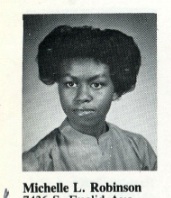
For the record, the photo below records Michelle’s hairstyle when she arrived on the campus some years ago.

I blog about this now not to embarrass the First Lady (though her daughters may enjoy the picture) but to underscore that it is beyond doubt that Michelle Robinson Obama — and her hairstyle –have both come a long way.

Michelle Robinson, Princeton Freshman Herald 1985

Michelle Robinson, Princeton Freshman Herald 1985

Of course, none of us look the same as we did in college.

Thank goodness.

N.B.: Photo editors and show bookers out there, please note: there are no other photos to share.

Jimmy Goldsmith and Me

19 Oct

The Stock Market Crash of 1987: Twenty-five years on….

There was one man who seemed to see it coming: Sir James Goldsmith, Anglo-French billionaire, global environmentalist, suave corporate financier, elegant bon vivant. Ladies man.

Was he Ian Fleming’s inspiration for James Bond, or for one of his villains?

Perhaps both.

What I know now from the perspective of 25 years in business after having first met Sir James is that I learned a very great amount from the man.

He famously sold most of his stocks just before Black Monday, Oct. 19, 1987, and then he tried to achieve one of the world’s largest leveraged buyouts. It was a privilege to get to know him well. He was one of a kind.

Image

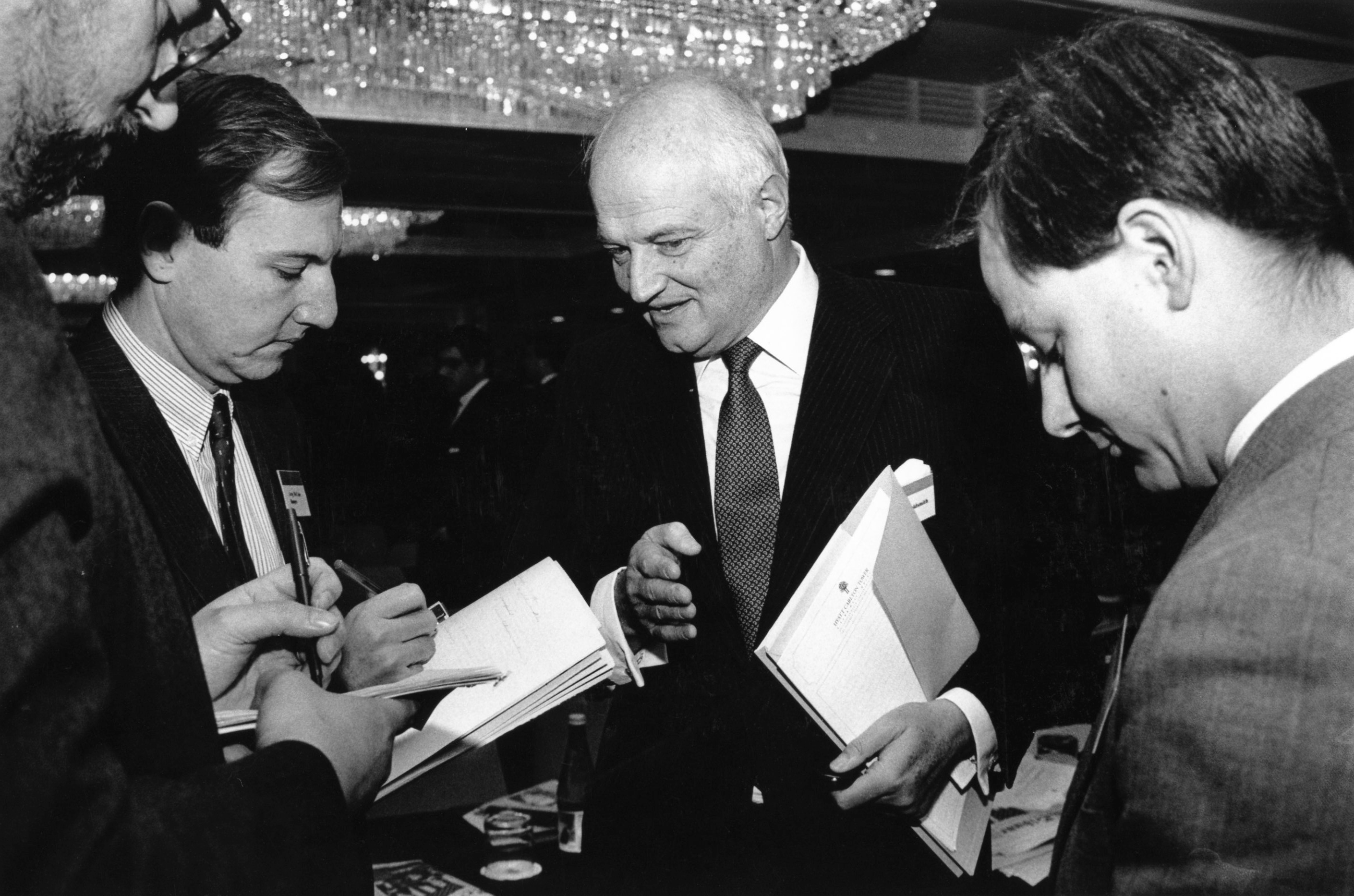
(I am the scribbler hanging on his words on the right of the photo.)

That Syncing Feeling

27 Aug

Has the ‘syncing feeling’ affected you, too?

Below is a link to my WSJ edit pager on an unintended consequence of the smartphone cloud: the new time we need to spend to make sync work as cheaply and efficiently as possible…Especially when traveling overseas. I was struck by this recently — as mobile services become more powerful (which is great!) they are also forcing us to spend more time fiddling and fussing with them to make them as efficient and inexpensive to operate as possible.

Many thanks to Gordon Crovitz, whose column returns to its regularly scheduled spot next week!

Here is the link:

http://on.wsj.com/PlrXLs

Secrecy, Troop Movements and Social Media

13 May

Reading the Pulitzer-winning (1931) memoirs of General John Pershing recently, I am struck by many things, including the horrifying first use of chemical weapons, the unprecedented loss of life (700,000 dead at Verdun alone), and some unexpected ‘walk-on’ cameos including the Zelig-like appearances of a youthful, high-energy captain on the General’s staff named George S. Patton, Jr. (who later would return to his own fight in France).

But perhaps most interesting, given the unbelievable progress in communication technology since Pershing’s time, is the commander’s genuine shock and horror that the arrival and movements of the U.S. Expeditionary Force on European soil was extensively covered in the press of the time. “To my utter surprise” Pershing noted, the arrival of the Doughboys was thoroughly documented including “port of debarkation, the designation of units and the number of men.”

Pershing called on his aides for an immediate and total censorship lockdown, which was mostly successful. “Secrecy gives a commander the possibility of surprising his opponent,” Pershing writes (pg. 89) “The surest road to defeat would be to let the enemy know all about one’s plans and preparations.”

Fast forward to about a year ago, when a blogger in Abottabad, Pakistan started tweeting about the unusual presence of helicopters in the night sky of the city. Those helicopters, of course, were carrying the U.S. Navy SEALs who killed Osama bin Laden. Had the local blogger been a little earlier, or a little more aggressive, he might have alerted the entire Bin Laden compound to the presence of the commandos.

How long will it be before the casual tweet or Facebook post will actually directly lead to a botched rescue mission, assault or other incident? It is hard to imagine anything else.

What’s even harder to imagine is how to put this particular genie of social media back in the bottle. When I was running Yahoo! News, there was light editorial oversight of social comments. But there really is no mechanism that has the footprint or scale to have any sort of pre-publication review. Hard to imagine that even being possible.

Which leads solely to this conclusion: Had social media existed in ‘Black Jack’ Pershing’s time, there’s no question that the arrival of the US forces in France would have been tweeted and blogged. Probably the arrival would have been recorded and streamed on YouTube.

At CES, The Most Important News You Didn’t Hear….

16 Jan

CES 2012

….was the relative competition between China and India for their future piece of the global TMT (Technology, Media, Telecom) landscape.

The verdict: At CES, no question this round goes to China — a virtual shutout of India, which was almost invisible in contrast to the enormous and growing presence of Chinese technology manufacturers, telecom hardware and software providers and infrastructure players in glitzy splendor among the 153,000 attendees of this year’s CES in Las Vegas.

Such Chinese leaders as telecom giant Huawei (with its sub-$100 Android smartphone) had significant floorspace. And this very large presence was more than exceeded if you total the dozens of smaller companies more modestly showing one or another interesting new take on an existing business (e.g. super-powerful, super-inexpensive tablet computers) or on a new business (cleverly designed bluetooth-enabled holders to attach your iPad to the back of the front seat of your car to create a cheap backseat entertainment center).

But the ‘missing force’ at CES was India, whose large and growing technology and telecom industry was more or less AWOL from the show. Not that India’s tech executives were absent: I had several great meetings with leaders from several Indian players in the telecom and IT outsourcing industries.

But given the pace of growth of India’s telecom and technology industries and the increasing global role they are playing, it was intriguing India’s technology leaders were most notable in their absence. I know from the very strong growth app-store marketplace leader Appia is seeing in India through its relationship providing mobile applications for Vodafone India, for instance, that the Indian market is surging.

Yet Indian manufacturers and technology companies seemed almost invisible at this year’s preeminent consumer technology showcase.

Why? There are those who say CES is past its prime, and perhaps that explains the absence of some of these players. But at an event where China played such a visible and growing role, the  contrast with India provides an interesting anecdote.

The only conclusion on the ground was: China is ‘leaning in’ on a global export opportunity, and India — by appearances anyway — seems to lean in the opposite direction.

Joining Appia Inc. as Executive Chairman….

7 Sep

I’m super-excited to be joining the Appia Inc. board as Executive Chairman. In a short time, Appia has become the leading independent global source for mobile app discovery and download (that isn’t owned by Apple or Google or RIM or Nokia).  Jud, Alex and the Appia team are simply killing it in global distribution of the mobile apps that make all our devices more useful.

You may not yet know Appia, which provides white-label app stores to carriers around the globe — but if you have downloaded an app on any of the seven Continents, chances are high you have used Appia to do it….

I am looking forward to helping the Appia team accelerate their already growing momentum, and hopefully helping lead to an outcome as great as a previous company I had the privilege of Exec Chairing —  WHERE – has enjoyed since their acquisition by eBay earlier this year.

I’ll continue my roles on the boards of some other great companies as well. The focus: accelerating profitable growth.

AllThingsD had a nice writeup here

Press Release is here

Eric Schmidt’s Biggest Mistake

1 Jun

It is not often that a public-company CEO lays bare his faults before his peers (and a global livestreaming audience) and candidly answers a question about the worst thing he or she got wrong in the job.

Tonight, Google Executive Chairman Eric Schmidt did just that. And it is worth noting the authenticity with which he recounted his biggest screw up in a decade as Google CEO was fairly stunning for its directness.

And that is a management lesson for us all to consider.

Specifically, Schmidt said Google missed the huge opportunity to create the social platform that Facebook has become, noting that the now-being-solved platform opportunity around our “identity” is one of the defining opportunities in technology.

“The CEO should take responsibility. I screwed up in missing the ‘identity’ opportunity,” he said. “I wrote memos about it four years ago. I wrote memos about it three years ago. But I did nothing.”

There was a brief pause while the audience simply took in the direct point.

And then Kara asked the perfect followup:

“Why?” she asked.

“Because I was busy,” said Schmidt. Which he no doubt was. Not an excuse. Just a statement of fact.

Schmidt said many other interesting things during his remarks, and then a few more when several of us ate dinner together (though it was a short, cold dinner outside once the sun set). Among them: Google is working on the next generation of search which will be about algorithmically winnowing down its results to the best answer to a query, as opposed to its current model of finding the web page that most closely seems to relate to the query. (This is a big change — and a big deal if done right). He also expressed concerns about countries beginning to wall off the internet from the basic standards that makes it work the same way from Lebanon, PA to Lebanon, in the Mideast. And he showed new Google wallet payment technology which is the company’s entry into the new era-defining opportunity of local-social-mobile commerce. The Mashable guys did a fine job summarizing his remarks here.

But the most memorable thing was his no-nonsense answer to the direct question of what he got wrong, which he volunteered with no caveats.

My own view is that this is what we will remember the longest about what he said here tonight. And there is a lesson in management for all of us in that.

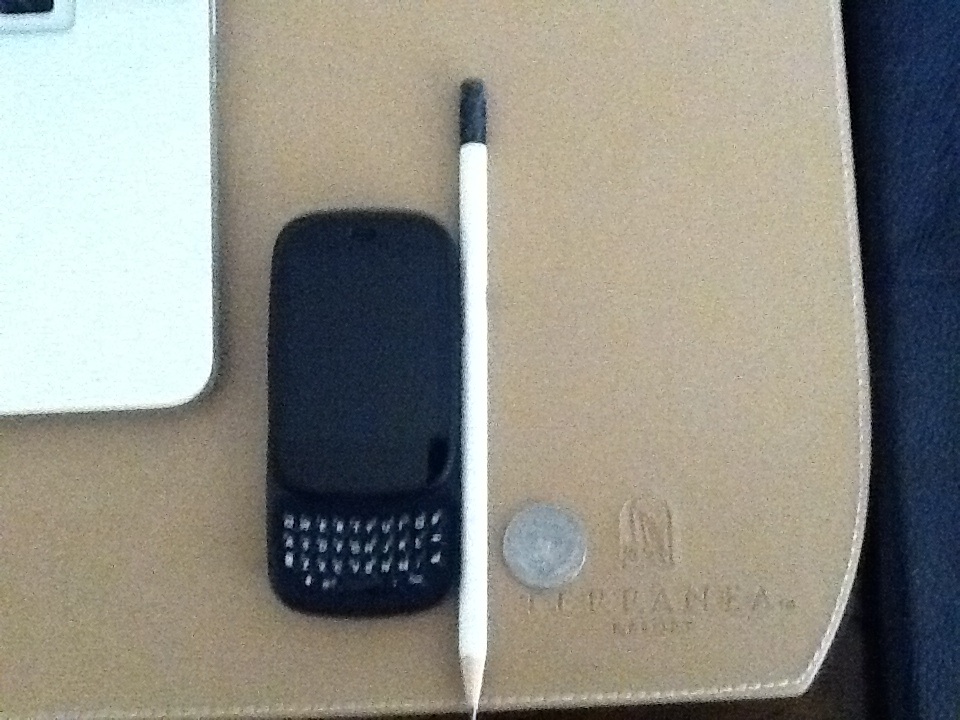
#D9 Swag Bag Includes this HP Veer cellphone…

31 May
…Claims to be among the smallest 4G phones, it is hard to see how such applications as WHERE can be integrated on the tiny screen….But if you think the screen is small, you should see the keypad…HP Veer 4G Mobile Phone"
The HP Veer is the sort of phone ‘Zoolander’ would have liked….